Showing posts with label Advocacy. Show all posts

Wednesday, November 13, 2013

The Sad State of Financial Literacy Education


These Infographics can really tell a story. Happy and Sad. While this one is from last year and it refers to US stats we can refer to many of the CDN numbers because we found the data. Perhaps someone creative will make me a nice infographic shortly (I'm not the creative type of accountant that you read about in the news) 

The data is based on a few different studies including an International Study of Financial Literacy undertaken by Visa each year. A barometer of sorts and based on information from 28 Countries. You might want to take a seat: 

  • Wealthier nations spend the least amount of time talking to their children about money. Americans spent approximately 26 days a year whereas Canadian parents only spent 22 days a year talking about money management issues. Parents from Brazil & Mexico topped the list-spending about 42 and 38 days respectively talking to their kids about money 
  • More than half of the countries surveyed believed that their youth do not understand finances. Canada, the US and Bosnia had the worst opinion of the level of financial literacy that their children have-with 70% saying their teens don't understand money management basics.
  • Both in the US and Canada approximately 56% of households do not have a budget. 
  • In the US, 22% of families really don't have a "good handle" on what they spend each month on housing, food or entertainment
  • In the International study, US Teens ranked NEXT TO LAST for their financial knowledge of 28 Countries at NUMBER 27. And Canada? Canada came in at NUMBER 26
  • In the US, Only 13 States (in 2012) have made a personal finance course mandatory in school. What are the requirements across Canada. We will reach out to find out. We know in Canada...Financial literacy education is not happening to any great extent or to any extent of where it should be for the benefit of our next generation. 


Thursday, July 25, 2013

Let's get it together Ontario for the sake of all residents (and former residents)


The submission deadline for Ontario's unclaimed Property Program has been delayed until Sept 18th. I guess the thought is that we are already 40+yrs behind the US & so what’s a few more weeks especially when the weather is so delightful.

But sadly, this is the second try for Ontario (!)

Ontario was the first province to pass Unclaimed property legislation in Canada (1989). 22 years later it was still not in force and the Bill was repealed.

Of my many suggestions to the Attorney General here is one….

No more push to paperless until Canada gets all Provinces onboard with Unclaimed Property Legislation.

Yesterday I got a note from my RESP provider (Invesco Trimark). No more PRINTED semi-annual statements effective 2014. Not cool because this increases the risk that any funds with Invesco Trimark will go unclaimed. But Age Unfriendly as well. Do all Invesco Trimark Investors have online access? Really? 

The US considers such legislation as an important component of Consumer Protection Legislation-and it is! So...why are we some 40 years behind? The US has $58B in unclaimed funds/property despite the program but searching for assets is much easier.


In Canada ? The total is at least $4B and the searching is difficult. 


Read more on submissions to Ontario's Unclaimed Property Program

Wednesday, February 13, 2013

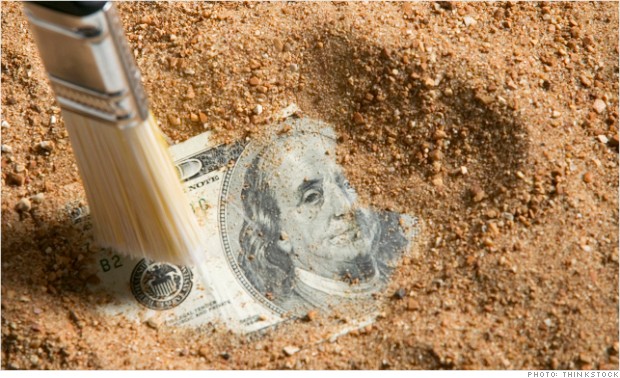
USA Unclaimed Property Balance hits $58 Billion yes $ 58 Billion


It looks like the unclaimed fund balances have recently  been updated by each State, federal and other organization as required in the United States as a new figure is being quoted for the total held. Ready....?
The new estimated value for unclaimed property is now ...$58 Billion.
Again, sad but true. That's a lot of money as it works out to approximately $186 per resident of the US. Imagine if that money was all put to use in the economy.

The list of assets included in what the US defines as unclaimed (or abandoned) property (or sometimes referred to as unclaimed assets or unclaimed funds) is quite wide ranging in the US and actually getting wider.

Common forms of unclaimed property in the US includes savings or chequing accounts, stocks, uncashed dividends or payroll checks, refunds, traveler's checks, trust distributions, unredeemed money orders or gift certificate/cards (in some states), insurance payments or refunds and life insurance policies, annuities, certificates of deposit, customer overpayments, utility security deposits, mineral royalty payments, and contents of safety deposit boxes.
Here's some further detail on this $58 Billion estimate:

·        $300 Million in pension benefits from employment owed to 38,000 individuals

·        $16 Billion worth of matured US savings bonds (more than 45 million bonds)

·        $153.3 Million in tax refunds that were not deliverable by the IRS

·        $1 Billion in unclaimed insurance policy proceeds

·        $41.7 Billion in unclaimed funds held by individual states.


This last figure of $41.7 Billion is worthy of some further explanation. .


While rules vary slightly between each state, specific types of property are considered as being ‘abandoned’ or unclaimed when there has been no activity for 1-5 years. At that point, all financial organizations or any organization holding such property or funds are required to turn them over to the State Treasury.

Each state then takes over the search for owners through websites, newspaper ads, and booths at Malls and events like State fairs and Exhibitions. While searching for the owners, the State can use those assets to fund government operations but the owner’s claim to the property remains intact. Of the $58 Billion in unclaimed funds that has been reported, $41.7 Billion is being held by individual States. .

"The money belongs to the owner in perpetuity. Even if the owner dies, then their heirs could come back and claim it," said Carolyn Atkinson, West Virginia's deputy treasurer for unclaimed property and a past president of National Association of Unclaimed Property Administrators.


More on this story:

To learn more about the National Association of Unclaimed Property Administrators and for a link to all State databases : NAUPA Website


Tuesday, February 12, 2013

Google Alerts fuels my obsession with the problem of Unclaimed funds


Google Alerts has been fueling my obsession with the problem of unclaimed funds for a long time. Every day in my inbox appears stories related to the reporting of unclaimed assets or the actual reuniting of long lost owners with those assets.
These stories all come out of the US primarily and not from Canada. While the stories are heartwarming they are also troubling since 1) it confirms the very real problem that exists related to unclaimed property and 2) it makes me wonder how Canada could be so far behind in legislating unclaimed property regulations when those regulations have been in place in the USA for 40+ years and 3) I fear that no one in Canada really has any proper handle on the extent of the problem here and finally, 4) given a multitude of factors, the problem of unclaimed funds will continue to rise at an ever faster pace. The problem is global and will grow unabated without a 'multi-pronged approach' of awareness, legislation and a financial organizing solution that individuals can put to use to safeguard their hard earned, tax paid financial assets.

Here are 3 stories from 3 different States to give you a sampling of what I read every day.

Feb 5 2013

Report from KLKNTV news/Nebraska:

The State of Nebraska paid out more than $1,215M to residents in in January 2013 made up of $560,000 in cash and more than $655,000 in stock and safekeeping items including:

·        A woman from Lincoln, Nebraska received $60,404 in cash and more than $232,000 of valuables from a safety deposit box.

·        A couple from Omaha were paid out a claim worth $101,000

·        A man originally from Nebraska now living in Colorado received $60,000 in cash and more than $217,000 in valuables

·        Two brothers from Omaha each received more than $33,000 from an abandoned chequing account owned by their uncle who died in 2008

The unusually high amount was a result of additional effort put into finding owners and returning as much money as possible, as expeditiously as possible reported the State Treasurer. The State is holding more than $125 Million owed to 350,000 residents or former residents from Nebraska. The list of owners for property added to the database for 2012 will be published in all 16 Nebraska newspapers and to the online database provided by the State.

January 16 2013
Report from the Quad City Times/Illinois

The total amount of cash and assets returned to Illinoisans through the state treasurer’s office last year increased by 27 percent over 2011; to a total of $129 Million up from $101 Million the year prior. Amounts returned ranged from a couple of dollars to an individual claim of $9 million. The Illinois state treasurer (Dan Rutherford) was thrilled “it’s pretty big when you can put $129 Million back into the economy of Illinois without raising taxes.” The state currently has $1.7 Billion in cash and contents from Illinois bank safety deposit boxes that have been abandoned for 5 or more years that is looking to reunite owners with. In Illinois, one in eight people has an asset to be claimed.

January 8 2013
Report from AOL Finance/Wisconsin

 
54 year old Daniel DeMeuse from Porterfield Wisconsin awoke $28,000 richer when he found out that a friend had left him money years earlier but the inheritance had been delayed by probate. At the time that the Office of the State Treasurer of New Jersey contacted him he was an unemployed studio artist and used the money to take care of his elderly mother

 
After reading just a sampling of some of the many stories I read each week,  you will have a better understanding of the 'why 'behind Legacy Tracker.  I think it is imperative that individuals and families have a secure and simple solution to better organize their financial and estate information which will help reduce the risk of their assets being lost. But it’s just as imperative that each Canadian province recognize the problem, shine a light on it and legislate some protection. Please.
 

Saturday, January 26, 2013

Sad but true. Another $48 Million gets added to the pile at the Bank of Canada


$48.4M of new (but dormant) money gets added to the big pile of unclaimed money at the Bank of Canada for 2012


Short on explanations but the Bank of Canada has updated the page I stalk on a regular basis and this is what it says:  

 ·         The balance at the end of 2012 is $496M from 1.3million accounts

·         The B of C paid out $17.4M to account holders
That’s about it. That’s all it says I am afraid. But this is what I can tell you because I keep notes based on my visits to the site:

·         The balance at the end of 2011 was $465M based on 1.3 million accounts
·         That’s a net increase of $31M
·         If 17.4M was reunited with long lost owners in 2012 then that means ….
·         $48.4M of new unclaimed money (see my note about what this does not include below ).. came into the BoC ? WOW.
Last year by comparison, the Bank paid out 15.8M to owners and the new money came in was $50M . So I have 2 questions:

1)    Isn’t that a lot of money for a Country of 34.6 Million or so???
2)    Am I the only one worried about this?  

A quick note about what Unclaimed funds do not include at the Bank of Canada
Deposits in any currency other than Canadian, RRSP's, Credit Union Accounts, Canada Savings Bonds or the contents of safety deposit boxes . There is no official reporting for these numbers...one can only guess.


But…It’s time to update my chart. Because I like to track this problem.  So a $31M net increase  in the unclaimed fund balance amounts to …a 6.7% increase which according to my records, is just under the net increase from the year prior and..that would be a 55% increase over the past 5 years!?! YIKES...WOW. That's a lot of missing money.

Bank of Canada Unclaimed Funds
Not including Credit Unions or Non CDN deposits
Balance at Dec 2012
1.3 million accounts totaling $496 million ; up 6.7% in 1 year
Balance at Dec 2011
1.3 million accounts totaling $465 million up 7.39% in 1 year
Balance at Dec 2010
1.3 million accounts totaling $433 million up 9.62% in 1 year
Balance at Dec 2009
1.3 million accounts totaling $395 million up 23.44% in 2 years
Balance at Dec 2007
938,000 accounts totaling $320 million
5 Year increase
362,000 accounts totaling $176 million up 55% in 5 years
Balance at Dec 1998
770,000 accounts totaling $132 Million
14 Year increase
530,000 accounts totaling $364 Million up 276% in 14 years
14 Year increase in value %
276%


We see 2 solutions to this problem:

Every province in Canada needs legislation like the US has had for 40+ years to ensure that unclaimed funds are:

a.     Defined, accounted for and reported on by any organization that holds such financial assets. Consumers deserve more transparent reporting by way of easily accessible and available search bases. We have the technology. Let it be utilized!

b.    Forwarded to a provincially regulated agency for safekeeping who will also be charged with proactively looking for the owners of such funds

And:

Individuals and families need a way to safely and simply track, monitor and share important financial and legal informaiton and documents in a single, secure place to reduce the risk of loss. The good news is that Legacy Tracker was designed to do just that and a lot more. Learn more! Take a view of our 2 minute explainer video noted at the top of the page.


.  

Thursday, December 6, 2012

Identity Theft-it’s real (and it’s real devastating)


Identity Theft is no idle threat; it’s real and it's devestating.

Criminals obtain stolen identities most often by starting with one stolen or forged document to obtain others like a driver's license or a passport which facilitates other crimes or helps conceal their actual identity.
 
The total reported dollar loss reported by Canadians resulting from Identity theft? :

A noteworthy $13.2 million in 2011 which is an alarming increase from the estimated $9.6 million in 2010. It might be even more alarming to know that many such losses do not get reported. A recent RCMP report noted that only 13% of such thefts get reported.

Here’s a list of tips from the Canadian Anti-Fraud Centre to help minimize the risk of identity theft.

1. Before you reveal any personally identifying information, find out how it will be used and if it will be shared.

2. Pay attention to your billing cycles. Follow up with creditors if your bills don't arrive on time. Where did they go?

3. Guard your mail. Deposit outgoing mail in post office collection boxes or at your local post office. Promptly remove mail from your mailbox after delivery. Ensure mail is forwarded or re-routed if you move or change your mailing address.

4. Utilize passwords on your credit card, bank and phone accounts. Avoid using easily available information like your mother's maiden name, your birth date, the last four digits of your SIN or your phone number.

5. Minimize the identification information and number of cards you carry.

6. Do not give out personal information on the phone, through the mail or over the internet unless you have initiated the contact or know whom you're dealing with.

7. Keep items with personal information in a safe place. An identity thief will pick through your garbage or recycling bins. Be sure to tear or shred receipts, copies of credit applications, insurance forms, physician statements and credit offers you get in the mail.

8. Give your SIN only when absolutely necessary. Ask to use other types of identifiers when possible.

9. Don't carry your SIN card; leave it in a secure place.

And here is one I will add because it happened to us and it can happen to you if you happen to be considering the sale of your house.

10.  Beware of the unsafeguarded Open House!

The kind of Open House that time forgot and so they are set up like they were 20+ years ago. An age when computers & electronics were a lot smaller and not as marketable, when identity theft was not a real concern and when prospective thieves were not able to see all of the detail about your house online to determine if it would be worth the drive. That would be the kind of Open House where as many visitors as show up are allowed to wander your house unaccompanied and at their leisure no matter how large your house happens to be and no matter if the realtor is elsewhere or kept busy with other visitors. The kind of Open House where you don’t get asked for any identification and you can keep your winter coat on and your handbag over your shoulder. Our family had $4,000 worth of electronics, cameras, and jewelry stolen from our nightstands and underwear drawers this past year. You can't put a value on the Christmas pictures taken a few weeks before or a hard-earned University ring from StFX. The experience has tested our family of 4's faith in human kindness and the very real possibility of a case of identity theft will hover over us for some time to come.

Open Houses are a prime resource for finding a document that won’t be missed but yet a document that can lead to a devastating loss of identity down the road.

For all of the effort and the attention on how and why to stage a house there should be the same emphasis on ensuring at least a minimum level of safeguards are in place to protect your property and that includes your identity. The more experienced and professional realtors know this and they will ensure that those safeguards are in place as compared to the more inexperienced realtors. This knowledge should help differentiate the realtors for you. Make sure you have a conversation about it with your realtor.
In the meantime, I have taken on yet another advocacy project - to help bring about legislation that would ensure that a minimum level of protective safeguards are in place to protect consumers in Ontario. So stay tuned.
You can find more information on Identity Theft on this website  info@www.antifraudcentre.ca